Roots, Radical.

DriftwoodTree

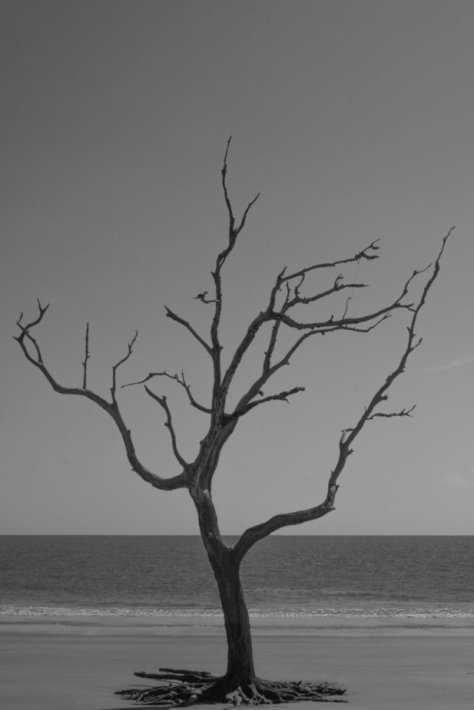
If you have read any number of my posts, it would not be an overstatement to say that I enjoy metaphors.  This lonely tree on the beach at Jekyll Island just begs for one, and who am I to deny what nature has so freely given.

I took this photograph on our “babymoon” just before Nora was born.  By “just before” I mean that Anna went into labor shortly after this photograph was taken.  We got back to the house just in time to turn around and go to the hospital, where Nora was born a brief time later.  I did not have time to process this photography until quite a while later, and here it is two and a half years later before I am posting it.

I was this lonely tree for longer than I would care to admit.  I had come out of that phase of my life by the time I came upon this tree, roots bare, and stark against the cloudless sky, but it is no less significant.  It represents many of the days that I walked on the beach at Big Talbot or nearer to our house in Ponte Vedra searching for soil into which I could sink my roots.  The irony of looking for this in the shifting sands of beaches is not, now, lost on me.  Nor is it lost on me that this tree took root on those sands, or that it continues to stand there despite hurricanes and erosion that would have felled weaker trees.

In fact, this tree stands because it is small, and its roots are proportionally giant and deep.  It would not surprise me if the root system was as large and deep as the tree is tall and wide.  As I look at it now, I imagine that the roots are a mirror image of the branches above the gray sand.  They are gnarled and strong, irregular and radical.  Radical is a favorite word of mine.  It literally comes from the Latin word radix, which means root.  To be radical is to affect the fundamental, root nature of something.  Conversely, a radical is someone who advocates a departure from the fundamental, root nature of a thought or idea.  I love the derivations, the roots of words.  They give words that we take for granted so many more layers, more strata, which, if you were wondering, means layers of things strewn about…I could go on and on…ad infinitum.

And they wonder why I was a Latin and English major…

On Gratitude

NC-Dec-7

When I write these posts, I often just start typing and what comes, comes.  I thought about this post a fair bit driving into work this morning at 2:45 AM.  I reflected on the days that I spent in North Carolina with my family, and how I would have far preferred to be there to just about anywhere else.  I also thought about how lucky we are to be able to spend that time in the mountains with family that loves us and whom we can tolerate—even enjoy—being with for a week.

Being grateful is one thing, and a good thing, but gratitude is something different.  Gratitude is active.  You can be grateful, but you show gratitude.  I don’t think I ever reflected on the difference, but as I sat down to write this post, I was struck by the distinction.  I was grateful to have been in North Carolina, but did I show gratitude for being there?  I thanked my parents, and David, who graciously allowed us to stay on his property, and, perhaps, this was enough.  Still, I am nagged by the thought that I could have done more.

It is a new year, and in this new year I will make a concerted effort to actively show gratitude for what I have been given.  I have worked incredibly hard for the life I have, but in many ways, I have been blessed with things that I could never have received without a great deal of grace.  I am slowly recognizing this, and I am grateful for all of the blessings in my life.  Gratitude, like faith, without action is nothing.

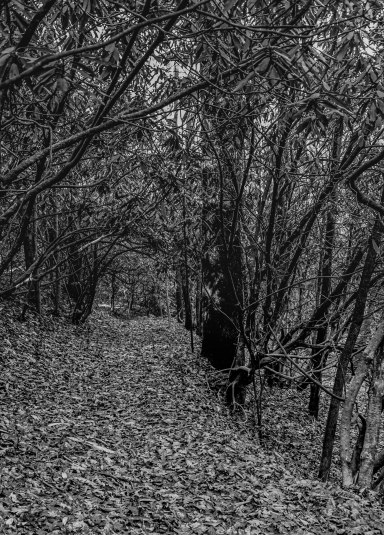
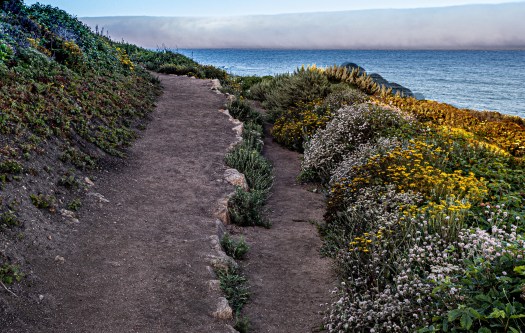
So, thank you, one and all, for all that I have been given, and all that I am able to give.  As I start this new year, the first of a new decade, I will continue to reflect on these thoughts of gratitude.  Perhaps they will nag at me even in the times where I want to be anything but grateful.  Life is a journey, not a destination, and like this forest path, I will try my heartfelt best to walk it with gratitude.

In my mind, I’m going to Carolina

NCWinter2018-85

We head back up to North Carolina for a week tomorrow.  There is something about crossing the state line from South Carolina and feeling like I’m home.  I miss Winston-Salem, and the nostalgia sets in every time that I drive through the main entrance to Wake’s campus.  The feeling of home is much more than being at Wake, walking to classes, or spending the weekends walking with Anna to Reynolda Village through the woods.

North Carolina is where I became who I am.  Though I lost myself for a while, I have recaptured that feeling, and I long to be back in the Piedmont, or even back to the mountains.  I know I will feel the same fulfilment of longing that I feel every time I return, and I know that I will feel heartsick to leave in the new year.

For now, though, in my mind, I’m going to Carolina.

Wright

Backgrounds-60

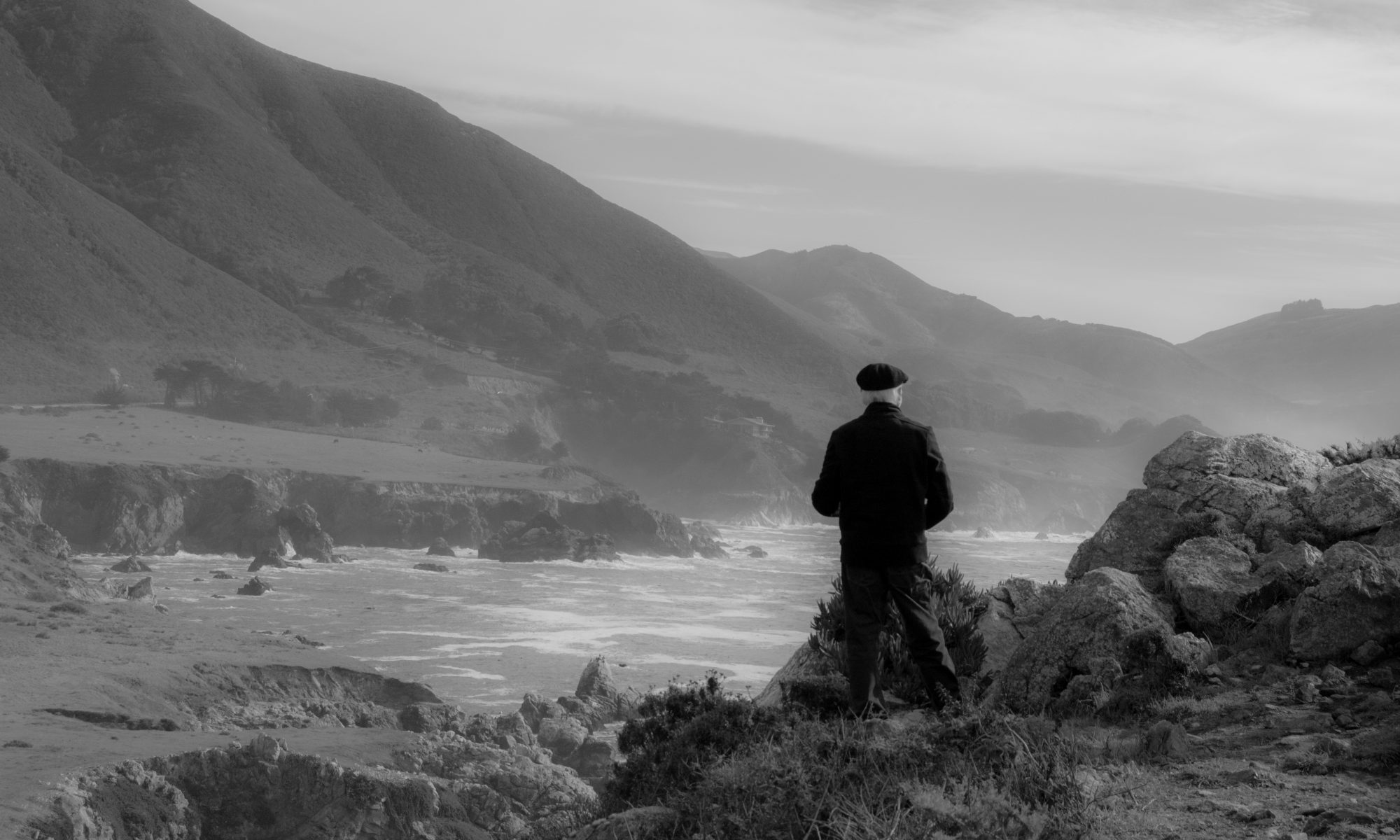
This picture makes me feel like a phony.

Compositionally, the photograph is nearly perfect.  The sight lines of the rocks and the mountain in the back converge on Kemper.  There is strong texture and contrast between the foreground and background.  Kemp forms the apex of a natural triangle, and the rule of thirds has been followed with strict adherence.  He’s looking away from the camera, natural and insouciant.  Hell, the wildflowers are even in bloom.

Yes.  This is technically ideal, and, had I planned it, I could not have executed it much better.  But that is just the thing.  I didn’t plan it.  I snapped the picture of Kemper on a rock in Garrapata State Park because he had come with me on a cold and windy morning, and he found a rock that he wanted to climb, and far be it for me to stop him from doing what brought me such joy when I was his age.

Perhaps there was something in my subconscious that told me to stand exactly where I stood to take this picture, rather than a couple feet to the left or right.  Perhaps it wasn’t happenstance.  I still remember one of my elementary school art teachers looking at a lump of unformed clay with me and saying that we had to take what the clay gave us.  What she meant, I think, was that an artist is not always the creator (if ever), but instead is—to use an archaic, but fitting term—the wright, who makes the best of what is given to them.

Ultimately, I didn’t have to take the photograph.  I didn’t have to make the decisions I did in post-processing, to bring out the contrast between the foreground and the misty background, or to crop it as I did.  But there we are.

This photo is not going to win any prizes or be displayed in a gallery, but it will make the rotation on the slideshow in my office.  When I look up and glance at it for the moment it remains, I will appreciate the happenstance of art a bit more, understanding that as a photographer I am not so much a creator as a wright…and that is OK.

Back to Where it All Began


Fuji-6I’ll admit, I didn’t feel a sense of nostalgia when I stepped onto the beach at Big Talbot on Saturday.  It wasn’t until I began processing the first photos from my new camera that the memories of the solace I found there five years ago came flooding back.

I came then to take pictures of the driftwood with my little Nikon D40.  It was the first place I brought my D7100 and D7500 after that.  It did not cross my mind, however, that I would be christening my new camera, as I had time and time again, by bringing it here.  Still, something in my subconscious drew me back to this beach on Saturday with a new camera and a renewed zeal for photography.

My new camera is a Fujifilm X-T30, a small but exceptionally powerful mirrorless camera.  It is so vastly different from the Nikons I have loved for so many years that I spent the better part of two weeks getting acquainted with the features and controls of the camera, watching tutorials and reading the manual like my very life depended on it.

Because the camera itself was more expensive than any of the Nikons I have owned, I only managed to pick up the camera and an 18-55mm f/2.8-4 AF lens at first.  I knew I wanted a wide angle lens, like my old Tokina 11-16 f/2.8, which had quickly become one of my absolute favorite landscape and architecture lenses.  The autofocus lenses would have put me back $500+, and I couldn’t justify this, so I took a flyer on a Rokinon 12mm f/2.0 manual focus lens.

I have not used a manual focus lens since I used my mom’s old Minolta SLR, but it proved to be an incredibly rewarding experience.  I felt more like a photographer dialing in the aperture manually and focusing the lens with the slightest movement to just below infinity, than I can ever remember on my autofocus lenses.  I picked up a cheap, but razor sharp manual focus 35mm f/1.2, which is by far the fastest lens I have ever owned.  I think this one is going to be more of a challenge, but I am greatly looking forward to it.  I have my eye on an 85mm f/1.8 for portraits of the kids (with their ages and frenetic movements, autofocus is all but a requirement).

The photograph above is the first one I took at Big Talbot.  The shot was taken handheld at 12mm, f/2.8, 1/350, ISO 125.  The sky was wonderfully expressive, and the application of a bit of a gradient filter to it in lightroom brought out the heaviness of the clouds that began to unleash their rain very shortly after I got into my car to leave.

I only took 150 shots during the hour and a half I was there.  With my Nikons, I would have taken at least twice that and kept, perhaps, five or six shots.  Something about the camera and the lens made me more thoughtful about composition and the elements in the shots.  I hope you enjoy this one, and the ones to come.  We are going up to North Carolina at the end of the week, and I cannot wait to see what my home away from home has in store for me.

On a New Year…

Backgrounds-89

To say that it was a quiet weekend would be something of an understatement.  Anna and the kids went down to Disney with a friend, and I was left to fend for myself in utter silence.  In my defense, I had made plans to go fishing with a buddy, but his boat was in the shop, and he ended up going out of town.  My solitude, therefore, was not completely of my own choosing—but I embraced it nonetheless.

Kemper starts school tomorrow—first grade—and to have seen him grow up just this summer has been amazing.  Last year was a learning experience for all involved, and I am not naïve enough to think that the first few weeks of the new schoolyear will be without its ups and downs.  Once he settles in, though, I am hopeful that this year will be even better than the last.

Nora begins a three day-a-week program soon, as well, and she blossomed in her “class” last year.  She is social, but I am terribly curious to see what her new independent, sassy streak will mean to her previously demure behavior.  As they say, history seldom remembers well-behaved women, so her cheekiness will likely serve her well.  It is something that her brother and I can foster with great aplomb.  I knew that she wouldn’t stay the sweet little cherub forever, and I am so enjoying her personality as it comes out more and more each day.

Life is good, and I look forward to seeing how much better it gets this year.

Backgrounds-88

On Miniature Versions of Yourself

Backgrounds-26

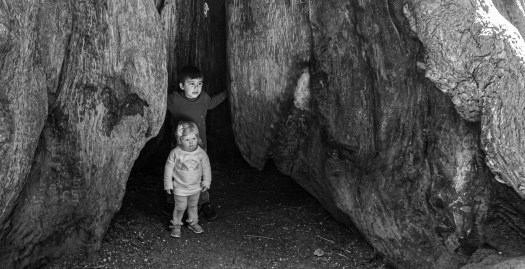
Although I have written a fair amount about Kemper and his travels with me, I have not given Nora her due credit.  The munchkin was a trooper on the trails, much better in fact than the minion was at his age.  For anyone who knows me, you can see from Nora’s face and general baby-bulbousness, the apple did not fall far from the tree.  There is, as I am wont to say, no denying that this one belongs to me.

She is a mellow little thing, until something lights her red hair on fire, and then she can throw a tantrum with the best of them.  Yes, she gets this from me, too.  She adores Kemper, and if she had her druthers, she would just follow around him the whole day keeping him company and playing with whatever toys he didn’t requisition from her (with force) because they were too small, and she might choke on them.

Because her mind is curious and wanders, she is great for candids (as this shot attests), and I look forward to using her as a subject as she grows up around me with speed that I didn’t think was possible, even though I have seen it firsthand with Kemper.


On the Perfect Composition

Backgrounds-79

I have taken many photographs that I am proud of, but there are some that I finish developing, set aside for a day or so, and then come back to with a sense of wonder that I actually took the shot.  This is one such picture.

Compositionally it is exactly what I was going for.  I am a disciple of the “rule of thirds,” which you can see in many of my photographs.  It is why you rarely, if ever, see my subject in the middle of the frame.  I think it distinguishes amateur photography from more advanced photography, and it was one of the first rules I ever followed.  It’s a simple trick to make the photos look more professional, and it works beautifully in this photograph.

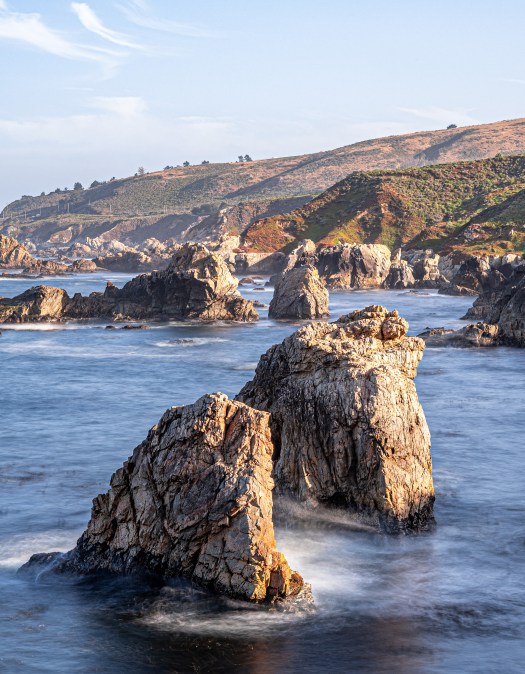
Like the post yesterday, this one employs a long exposure to soften the movement of the water around the rocks.  It was a bit more overcast on this day, and so I was able to take an eight second exposure, which completely blurred out the individual waves.  Because I was able to manipulate the light with the neutral density filter, the sky and sunlight appear much more golden and clearer than the actual atmosphere of the day would have permitted.

Most of the other shots that I took without using a long exposure from that day were gloomy, almost gothic captures of the rocky coastline.  This one is anything but gloomy, and that in and of itself is an accomplishment.  Because I had to take my time framing the shot, focusing, putting the filter on, manually adjusting the exposure settings, and only then firing the shutter, the photograph is not accidentally great like many of mine turn out to be.  It was one of the rare shots where I saw the composition in my mind and then captured it exactly how I wanted it.  Overall, it is one of my favorite photographs from the trip.

Be sure to follow me on Twitter at @stamandphotos and on Instagram @stamandphotography.

On Capturing Time

Backgrounds-67

The post’s title might lead one to think that this is going to be a philosophical post, which I regret to inform you, it is not.  This is a post on process, and the ability through some doing, to capture just a bit more than an instant in time with a camera.  Ansel Adams once noted that “You don’t take a photograph; you make it.”  This spoke to his process of spending hours in the darkroom on a single photograph.  Although he captured it through his camera, the photograph was as much about what he made of it as what he took.  This is why post-processing is such an important part of photography, whether in the physical dark room, or in digital software, such as Lightroom and Photoshop, which I use.

This trip, I set out to make photographs.  On the days that Kemp did not burst into our bedroom with the drive to go hiking with daddy, I took it upon myself to go to Garrapata and try out something that I had been wanting to do for a while: long exposure photography.

The premise of long exposure photography is pretty simple.  The shutter of the camera stays open for a longer period of time, letting more light in, and capturing a much longer “exposure.”  An “average” exposure in good lighting might be 1/250th of a second, whereas my long exposures this trip ranged from 1 seconds to 30 seconds.  If I were to have taken them by simply setting the shutter speed longer, too much light would have hit the sensor, and the shot would have been overexposed and completely white.  To counteract this, I gave my lens sunglasses…basically.

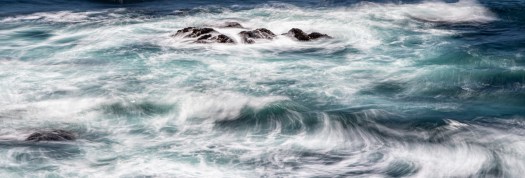
A neutral density (ND) filter blocks out a substantial portion of light so that the shutter can stay open for a long time, while allowing just enough light in to correctly expose the shot.  I used a 10-stop ND filter, which is on the darker, denser end of the filters.  This allowed me to capture 1 to 30 seconds of exposure in bright morning light.  This photograph is an awesome example of what resulted.  This one is only about 2 seconds, but it captures the movement of the waves, rather than freezing them in time like some of my other photographs.  You can’t see the individual droplets of water, but you can see the curves and currents, which are absent in the others.

One long exposure shot takes about 5-10 minutes to set up, because you have to frame the shot, focus the camera, put the filter on, adjust the settings manually to account for the filter, shoot the photo, and then go back to make sure everything was exposed correctly.  As such, it was a perfect exercise to undertake whilst Kemper wasn’t around.  The chorus of “I want a cimminum roll,” or “Are you finished yet,” would have made the morning a bit less enjoyable than it was simply taking my time and capturing 10-20 photos, rather than the hundred or so every other morning.  Still, I missed the little guy’s company.  Luckily, he did not stay away for too long.

Photographs are generally about capturing an infinitely small moment forever.  Sometimes, however, you can capture a bit more, like the curves of a wave or the flow of the current over the rocks.  I have always loved long exposure shooting, and I was so excited to be able to try it out this trip.

Also, follow me on Twitter @stamandphotos.

Backgrounds-66

On the Path Less Traveled By

Backgrounds-36.jpg

As an English major and a writer, I find metaphors in just about everything I do.  Just as I referenced the metaphor of Kemper on the path in yesterday’s post, this photograph of divergent paths struck me when I came upon it during a solo hike in Garrapata.  Kemper had decided that three days of strenuous hiking in a row was enough daddy-son time, and he sat that morning out—with the express condition that I bring a cinnamon (pronounced “cimminum”) roll for him on my way back through the village.

I love this photograph, not for the intrinsic compositional value of it, but because it is the literal embodiment of Frost’s poem (sans the yellow wood).  I took the one less traveled by, and indeed it did make all the difference.  It has, quite probably, scarred me for life.  Not exactly the effect that it had on Frost, but this is reality and Frost’s poem was a metaphor.

You can see in the bottom right corner, if you zoom in on the photograph, the incipient bunch of tripartite leaves of what, it turns out, is poison oak.  It was so prevalent along the paths, that certainly no one in their right mind would have traipsed through virulent shrubbery, and so I paid it no further thought until a few days post-hike.  Further, I am used to poison ivy, which grows on a vine rather than a bush of regret and sadness.  Sadly, some of the evils of the West Coast are disguised as hedgerows.

The path was, at the time, a fun little adventure.  It meandered closer to the edge of the cliffs’ edges, while keeping a respectful distance from the precipice in most spots.  There was a dodgy stretch, but some travelers, as disinclined to stride along a hare’s-breath of path juxtaposed against a sixty-foot plummet, had cut a secondary looping jaunt (through the damnable undergrowth) that avoided the cliff’s edge and certain death.  This was acceptable to me, and quite lovely, on account of the omnipresent, verdant, and then-innocuous shrub of despair.

When Anna, Nora, Kemper and I came to Garrapata later that day, I took Kemper on a small section of the secondary trail.  He was reticent to follow, but, ultimately, he did.  I told him only “big kids” could come on the path, and this was enough to carry the day.  Luckily it was chilly, and he was wearing jeans and a jacket – fully armored against the chaparral of anguish.

By Kemper’s age (6.5 years) I had already broken both of my wrists, sliced my thumb to the bone with a utility knife, and cracked a few toes; but he has, heretofore, not suffered any major bodily injuries.  He is cautious of the unbeaten paths, for which I am grateful.  In Frost’s poem, the narrator does not rush headlong down the path less traveled by.  Instead, “long I stood / and looked down one as far as I could / to where it bent in the undergrowth.”  As impulsive as he can be, this is Kemper’s general approach to life choices.  It will serve him well.