Drifting Together

September hurricanes framed this photograph of three water oaks (Quercus Nigra) astride one another on the shore of Little Talbot Island.  I took this photograph three years ago, and it remains one of my favorites of the driftwood beaches of Northeast Florida.  I returned to this spot with Kemper in early September, three hurricanes later, and the topography of the beach had changed radically.  The hulking live oak (Quercus Virginiana) skeletons with their naked root clusters, ten feet in diameter, perched in the air remained, but the smaller water oaks had been scattered by the waves.  This arrangement of trunks and limbs was no more.  I was disappointed that I could not point out to Kemper where I had taken the photograph that is displayed on a canvas in our living room, but then my mind wandered to the Romantic poets (which happens more than I care to admit).  They found beauty in the ephemeral existence of objects and life.  This photograph is my Ode to the West Wind, which rent the trees asunder with its driving gales and its nautical forces.  Like Blake, and Wordsworth, and Shelley, and Keats, I captured something fleeting, though, admittedly, I did not think that these huge skeletons were mutable, even through the power of a glancing blow of a hurricane.  But nature is ever-changing, and I took this for granted three years prior when I framed the scene in my camera and released the shutter.  It is a lesson to me to not underestimate the power of the elements and to capture what I can, when I can, lest it be gone in another season.

Click here for a larger version.

Stirring

ChristmasEve-3

I would like to say that this was a Christmas Eve candid of Kemper and Nora gazing into the lights and contemplating the true meaning of Christmas.  I would like to, but that would be disingenuous.  This “candid” took a half hour of bargaining and cajoling, many takes, and ultimately one perfect photograph.  In the end, though, that is what matters on Christmas–the memory of the moment, and not the chaos that went into the whole charade.  Christmas this year was one of the best I can remember, certainly in my adult life.  On Christmas Eve, I gave Kemper my old DSLR (a Nikon D40), which he will grow into and out of faster than a pair of tennis shoes.  On Christmas morning, we went to the Nocatee Preserve for his first photography outing.  As he took photographs of sticks and tree trunks, I thought back to when the photography bug first bit me in middle school.  Although Kemper is very young, only turning six at the end of January, he is just as curious as I was at that age, and he loved walking with me while I took pictures in the preserve or among the driftwood at Big Talbot Island.  Now he has his own camera, and in time, he will develop his own tastes.  As I said in a previous post, I have no doubt he will surpass me in time, when his patience kicks in (perhaps when he is thirty or so), but for now I will enjoy my little photography buddy.  I will teach him all I have learned, but the pose–that is all his own.

Click here for a larger version.

Symptoms

SSA Photography (109 of 400)

These desiccated little smoky polypore mushrooms (Polyporus Adustus), like a resurrection fern, will spring back to life after a brief winter rain.  Unfortunately, for the hardwood trees that they are found on, the time for resurrection has long past.  The enzymes in the mushrooms help to speed the decay of dead and dying trees in forests all over the world, including this one in North Carolina, west of Asheville.  Interestingly, they also can eat away synthetic materials, such as synthetic dies in plastics, and research is being done to see what role these common little mushrooms can play in bioremediation.  This dwarf American Chestnut (Castanea Pumila) still bore leaves, and but for the polypores on its bark, the tree would have otherwise appeared healthy.  But alas, it is the beginning of the end for the august old tree.  The mushrooms are a symptom of death and disease, otherwise invisible until the tree succumbs.

I think of my favorite aunt on my dad’s side, Irene, who died of cancer when I was younger.  I had seen her soon before the cancer took over, and she appeared healthy on the outside — albeit crusty and sarcastic to the end.  I regret not knowing her better, as she was a huge influence on my dad’s life.  My dad and I went to Maine to visit her and my memere, who was in the throes of dementia, and I spent most of the time in the back of Irene’s house on the rocky outcroppings looking for moose and wild blueberries.  I told her that I would bring her a harvest of the blueberries, which grew low to the ground, rooted in the interstices of the rocks.  I failed in my mission, eating at least two-thirds of what would eventually make it into my small bucket.  I told her that I had not found as many as I had wanted (which, I suppose, was true), but my lips, stained a dark shade of purple, belied my foraging skills.  She laughed and smiled her ever present wry smile, and we had an understanding.  I was the chubby kid who was not to be trusted gathering fruit, and she was the understanding aunt, too kind to say anything cross.  Perhaps if there were outward signs, I would have stayed inside longer to hear her stories of my dad and uncle, Harvey, and perhaps I would have been more judicious with the blueberries I promised her.

Click here for a larger version.


Kemper

SSA Photography (187 of 400)

How my son has changed in the brief time since I took this candid portrait of him sitting on the parapets of his appropriated, improvised stone castle on the beach in Carmel-by-the-Sea, California…  This is my favorite picture of him at this age, then just four, and now about to turn six at the end of January.  I took a number of shots with him looking the camera dead to rights, but something, perhaps a wanton setter or retriever frolicking in the surf, caught his eye, and the shutter released at just the right moment to capture him as I see him often, wondering at the world, a younger version of me–for better or worse.

I have a distinct sense that he will eclipse me with photography.  His sensibilities and sensitivities are beyond his years, and he is patient and kind.  He is gregarious, unlike me, and perhaps he will be more comfortable approaching a stranger for a portrait.  Above all, he is curious.  He has not yet ceased to find awe in the smallest things, which it took me years and a good macro lens to rediscover from the bowers of my childhood.  We are going to North Carolina just after Christmas and for the New Year, and I will bring my old camera and kit lenses to see what he will be able to find through them.  His attention span is limited, but his wonder of nature will, I think, balance the scales appropriately…or it could be a quick introduction to a skill for which his maturity is not yet prepared.

Like the rock in this photograph, which he gravitated towards as if he were a satellite, he has a favorite stone perch in North Carolina, though it is not a castle there, but the great jutting precipice in the Lion King movie from which Simba was introduced to the kingdom.  The Lion King rock is on the property of a family friend where we stay, along the drive to the upper cabin, and scarcely will the wheels have stopped their revolutions before he is unbuckled and hastening towards it.  Perhaps this year he will be able to climb it by himself, a feat he has yet to master.  If so, I fear we will see little of him that first day.  I was like him as a child, happy to be within myself amongst nature and my own thoughts on any manner of subjects.  Perhaps this year, I will send him out with a camera in hand to find what he finds interesting or beautiful.  Photography has been a window into my psyche, and perhaps it will give me an even better view into his.

Click here for a larger version.

Setting above the Sycamores

SSA Photography (397 of 400)

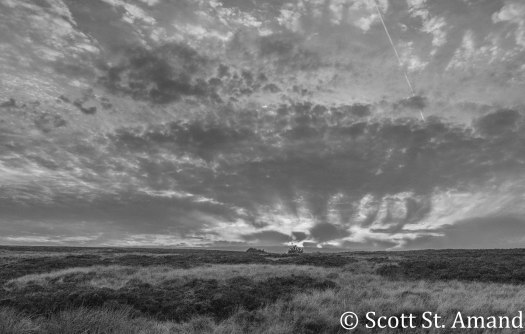
This was the last photograph I took on our trip to England in late August of this year.  I was tired, having climbed over moors, through the dales and back again at least four times over the course of the three hours or so.  The flatness of this picture belies the vertical bent of everything in England.  The sunset was magnificent because the clouds in the sky possessed such an impressionist character.  The patch of sycamores on the horizon grew closer and closer as we approached the setting sun, with Top Withens (the inspiration for Wuthering Heights) behind us.  There were no paths towards the top of the hike, which should have been an early harbinger of the difficulty of the climb.  For all I knew (and willingly shared with the rest of the hiking group), we were likely the only masochists to have made the hike for generations.  As we wended our way through the dense heather and tall wild grasses and bracken ferns, and I gasped for breath at manageable intervals, I thought back on that field twelve years prior where I proposed in a similar field across the valley from Anna’s grandparent’s house, amongst a small herd black and white Friesians.

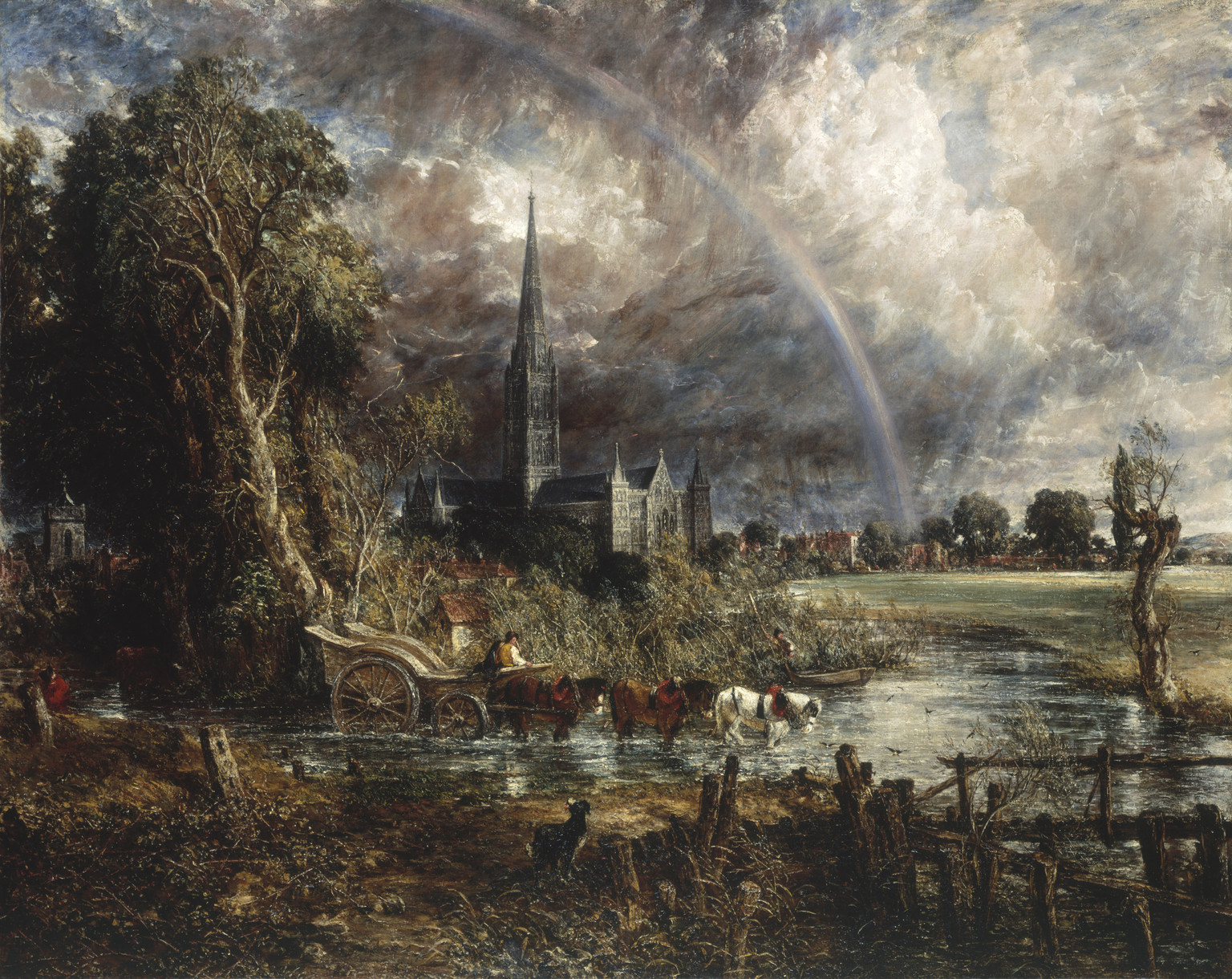
The beauty of Yorkshire has ceased to surprise me.  By this, I do not mean that it has become any less wondrous or awe inspiring, only that I have come to expect to look out on a field and see the beauty that inspired the Brontës and Wordsworth and John Constable and all of the other artists that have spent their lives’ work attempting to capture the magnificence of this landscape.  Indeed, the sky was something out of Constable’s painting of Salisbury Cathedral (sans the rainbow).  The beauty is almost laughably ubiquitous.  I have been to England three times now, and each time I am left with the distinct sensation that I was born on the wrong continent.  My archaic turns of phrases, my passion for history and ancient things, all find root in the mother country.  Anna’s grandmother, a strong Yorkshire woman, who still travels the world at 94, has adopted me as her “cloth” grandson, an appellation that I take very seriously, and I have been warmly embraced by the network of aunties and cousins — just the toe-holds I needed to claim a bit of Yorkshire as my own.

Click here for a larger version.
The Lone Cypress

SSA Photography (238 of 400)

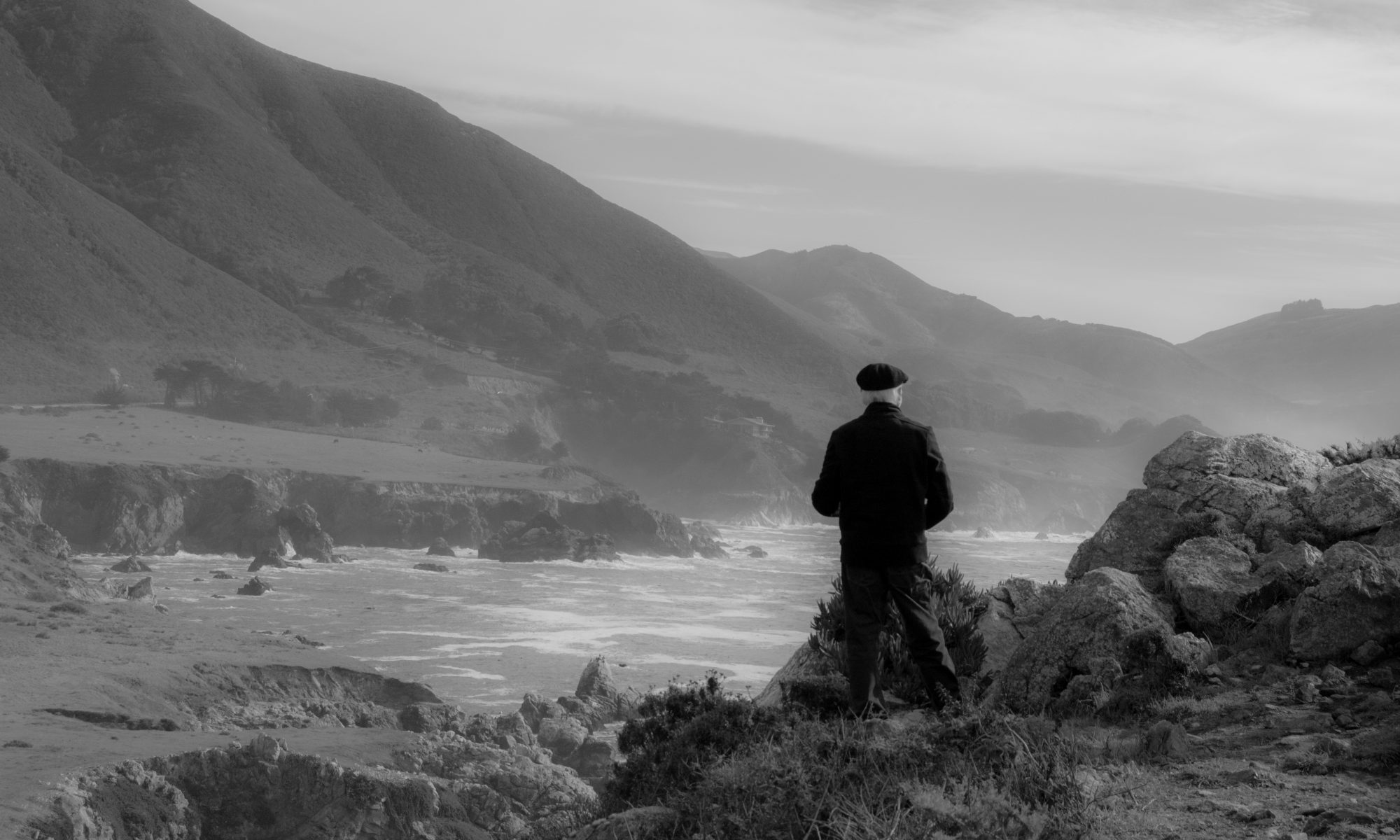
I often wonder how this iconic tree took root.  For those who don’t immediately recognize the scene, this is the “Lone Cypress” off the coast of Monterey, California.  This photograph was taken during the height of the Soberanes Fire southwest of here in the valleys just off the coast of Carmel and Big Sur.  Although likely surpassed by the recent Woolsey Fire, the Soberanes was the costliest wildfire in the history of California.  It coated everything in a thin layer of ash, and the smoke that hung thickly, almost unctuously in the air made shots of the coastline nigh impossible.  This photograph was taken towards the tail end of the trip, as the fire was winding down, and still the haze bled the details from the shot.

When the sun managed to pour through the thick air, the sky took on a burnt, sepia tone, which made every picture I took look like I had applied a strong filter to it.  The tree is at least 250 years old, and for the last 65 or so has been held in place by strong metal cables.  When I saw the cables in person, I thought that it was a supremely arrogant act by man to forestall the inevitable cycle of nature for the sake of Japanese tourists (and me) making a pilgrimage to gaze through chain-linked fence to snap an awkward photograph of the icon sitting on its outcropping, engirded as it is by a brick and mortar parapet.  But still, we come en masse, ogling the tree with a misplaced reverence.  When this one dies, as it will, it will be replaced with a fellow that I am certain is already being grown for its stead, like a Cardinal waiting in quiet for the Pope to abdicate.

Click here for a larger version.

Post & Lintel

SSA Photography (95 of 400)

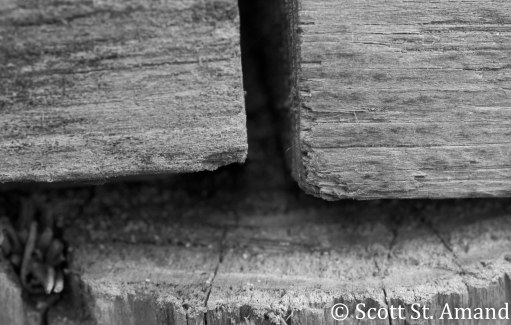
Though I do not take many abstract shots, this one came rather organically.  Taken at Big Talbot Island, just north of Jacksonville, Florida, I had fixed my macro lens on my camera halfway through the long walk down the driftwood-strewn beach.  I had already taken many photos of the fossil-like trees, languishing and bleaching in the hot sun, and so I set out to capture the little elements that required me to look closer and actually observe the microcosms of barnacles and tulip snails and patterns in the grains of the wood.  The day was cut short by the heat, which beaded down my forehead into my eyes, making the very act of photography an unpleasant task.

As I walked back the mile or so to my car, I left the lens cap off of my camera in case anything small, otherwise insignificant, caught my eyes, which burned with the sweat.  Near my car, there was a rickety old circular wooden handrail.  I cannot say why, but the way the rough-hewn logs stretched horizontally around, propped up by a glorified dock piling, reminded me of Stonehenge.  I’ve never been, though I did see a large stone circle in the Lake District years ago.  I scrunched up to where the post met the lintels, and manually focused my lens on the dark interstice between them.  I thought nothing of the photograph until I got home and began editing the photographs which I had taken that day.  There was something appealing about the abstract composition of the capture that pleased me, and, what’s more, intrigued me.

Photography has a way of elevating the mundane to art.  Whether that was achieved here, I leave up to you, but in this particular perspective, the photograph seems to create something far more significant than a fence and its post.  It is, itself, a simile without words.  By giving it a title, I was able to ascribe significance to it–it was no longer simply pressure treated lumber bolted together.  It was like Stonehenge.  This photograph taught me a lesson, which I carry with me to this day.  What may seem insignificant may be given artistic meaning, sometimes simply by capturing it with the camera, and other times simply by giving it a name, an identity.  In this way, photography is kin to poetry, revealing the beauty and grace within the quotidian.

Click here for a larger version.

A Sunday Walk (In Florida)

AngelColor-5

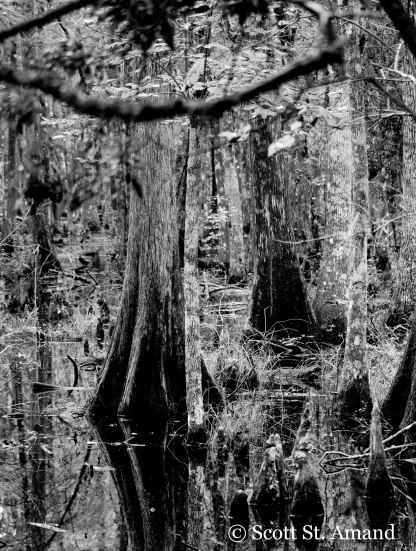
Being from Florida and going to college in North Carolina, the natural questions often arose as to whether I kept an alligator as a pet or whether I lived in a swamp.  The latter question was more on point, as most of Florida is a swamp.  We live near two nature preserves, Guana Tolomato Matanzas National Estuarine Research Reserve and Nocatee Preserve.  I love taking Kemper in either, as his wonder for nature is still brimming with optimism and zeal.  I could not pry him away from his animal figurines, and so I went to Nocatee Preserve by myself.  I made a concerted effort to view the swamp that surrounds the paths through his eyes, and I snagged a number of photographs that captured a child-like whimsy that I had lost long ago (when it comes to swamps).  This photograph of grove of bald cypresses (Taxodium Distichum) typifies this approach.  I have seen so many in my life, that I take their majesty for granted.  In the wild, these august trees can live for thousands of years.  The largest and oldest, the “Senator” was estimated to be 3,500 years old.  One of the bald cypress’ most unusual characteristics is its “knees.”  The knees are conical growths protruding up from the root system that radiates out from the tree’s trunk.  They often have a knobby, knee-like appearance at the top.  Their function is unknown, although studies suggest they may help the cypress absorb oxygen and remain stable in loose wet soils.  Approaching the swamp with a renewed perspective (a truly Florida tack) was a great lesson for me to learn.  As this photo attests, there is beauty even in the brackish, tannin-dyed waters of the Florida swamps.

Click here for a larger version.

Whirls

SSA Photography (101 of 400)

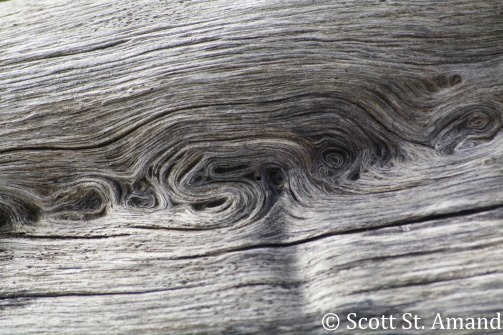
As I have mentioned before, the patterns of nature fascinate me.  The swirls and whirls on this driftwood tree, most likely a live oak (Quercus Virginiana), caught my eye immediately when I took to the beach with my macro lens.  I had passed the tree numerous times before, camera in hand, but I overlooked the fascinating, almost embryonic patterns along the large branch that reached towards the ocean.  I cannot believe that I missed it, but in hindsight, I was not looking for the little intricacies of nature when I first came to Boneyard Beach; instead, I was looking for patterns in the trees strewn about the sand, which I found in the hulking driftwood trees.

A certain bit of melancholy washed over me as I returned a few months ago, two years hence, and two hurricanes since.  The beach was not as I remembered it.  The huge live oaks were still there; not even a category three storm could have moved them.  Yet the smaller ones, like this one with the whirls, had been washed away.  Perhaps they will be rolled back to shore by the heavy waves of a nor’easter, or, perhaps, by another hurricane.  But for now, they were gone.  I brought my son to the beach when I returned, hoping that he would find the same beauty in his five year old eyes.  He, too, was enamored by the tulip snails, and he let go of his fears long enough to sidle up the trunk of one of the supine live oaks.  I let go of the melancholy, as well, and I ventured to find new patterns in the niches where limb meets branch or branch meets trunk.  Someday, Kemper will be old enough to mind the patterns, but for now, I will let him find the joy in the bigger picture.

Click here for a larger version.
Southern Needleleaf

AngelColor-2

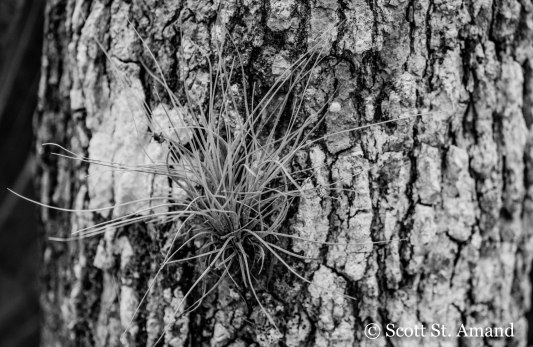
This photograph of a southern needleleaf air plant (Tillandsia Setecea) on a water oak (Quercus Nigra) was taken on a hike in Nocatee Preserve near my home in Ponte Vedra Beach, Florida.  The needleleaf is an epiphyte, an organism that grows on the surface of a plant and derives its moisture and nutrients from the air, rain, and debris accumulating around it. I am fascinated by epiphytes, like the resurrection fern in an earlier post.  In Florida, they are everywhere.  We had a few large crepe myrtles in our back yard, and the needleleafs practically covered the trunks and branches of the trees.  I have always been curious how they take hold on their host tree.  Many people have seen these members of the bromelaid family, but few have ever seen the beautiful and delicate purple flowers that bloom for an instant and are gone.  I have been lucky enough to see the blossoms, having grown up around them, and perhaps as the Romantic Poets believed, they are all the more beautiful because they are so evanescent and fleeting.

Click here for a larger version.